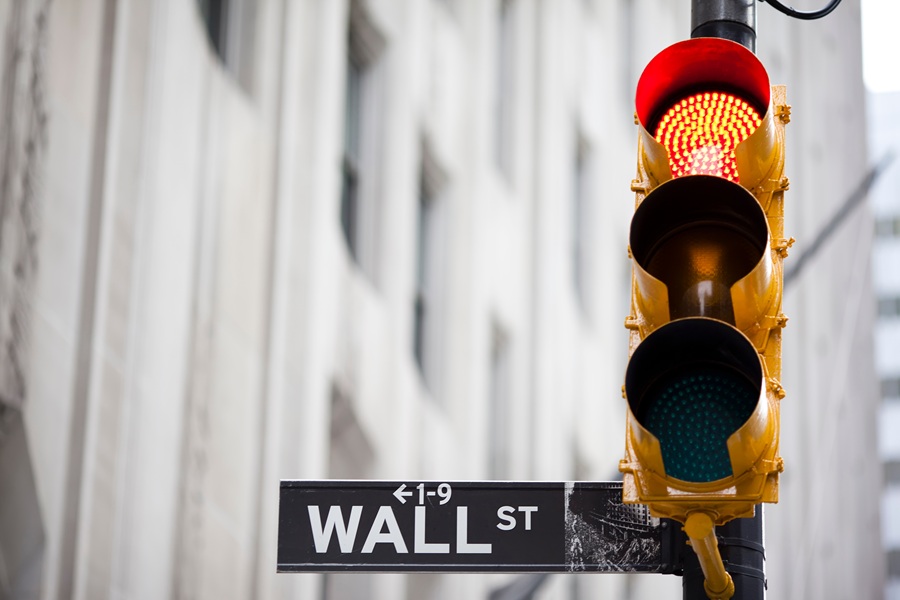
In the words of Bjork’ 90s indie hit “Oh So Quiet” –It's, oh, so quiet Shhhh, Shhhh, It's, oh, so still Shhhh, Shhhh, You're all alone Shhh, Shhh And so peaceful until…Until… that is the question, and considering it is ‘peaceful’, it's probably best to review the minutes from the Fed as it is signalling that the quiet time is not far from ending soon.FOMC: The Pressure BuildsThe May 6th to 7th Federal Open Market Committee (FOMC) minutes reaffirmed the Fed’s cautious stance, with Chair Powell keeping to the “wait and see” script. But under the surface, the outlook has become more complicated as event risk is getting louder.Clearly, Trump’s Tariffs have created new complications for the Fed’s dual mandate.As the minutes note:“With uncertainty higher due to ‘larger and broader’ than expected tariffs, the Committee may ultimately face a more difficult trade-off between its price stability and full employment mandates.”And this was well before the Trade Court’s decision that the Liberation Day tariffs are illegal under the Economic Emergency Act of 1977, and then it was subsequently overturned 24 hours later by the appeals court.The Fed has flagged increased downside risk to real activity and now sees the probability of recession as nearly equal to its baseline forecast. At the same time, inflation risks for 2025 have been revised upward, though longer-term projections remain skewed to the upside, particularly as inflation expectations creep higher.Seen in these quotes from the minutes:“The staff continued to view the risks around the inflation forecast as skewed to the upside, with recent increases in some measures of inflation expectations raising the possibility that inflation would prove to be more persistent than the baseline projection assumed.”“Many participants reported that firms planned to partially or fully pass on tariff-related cost increases.”To paraphrase Milton Friedman, “Tariffs are not a tax on the sovereign, they are a tax on the consumer.” And this is what is being missed by government officials and the President himself.A counterargument to higher cost is that Fed officials suggested there is a chance of weakening demand, lower immigration driven housing inflation, and competitive pricing tactics. Which would feed back into the risk of recession as mentioned above, and signal that the US is entering a new stagflation era.Seen here:“Several argued that there might be less inflationary pressure for reasons such as reductions of tariff increases from ongoing trade negotiations, less tolerance for price increases by households, a weakening of the economy, reduced housing inflation pressures from lower immigration, or a desire by some firms to increase market share rather than raise prices.”On employment, the labour market remains tight but is potentially vulnerable to hiring pauses as policy and trade risks weigh.“The labour market was seen as ‘broadly in balance’ and the unemployment rate as ‘low.’”“Participants were concerned that tariff uncertainty could lead to a pause in hiring and the labour market to soften in the coming months.”Financial market signals were mixed. Several participants noted an unusual pattern: long-term Treasury yields rose even as the dollar weakened and equities sold off, raising concerns about shifting correlations and safe-haven perceptions.“Some participants commented on a change from the typical pattern... with longer-term Treasury yields rising and the dollar depreciating despite the decline in the prices of equities and other risky assets... [noting] that a durable shift... could have long-lasting implications for the economy.”Monetary framework discussions continue as well. The Fed appears to be reconsidering its post-COVID commitment to flexible average inflation targeting (FAIT). The minutes state:“Participants indicated that they thought it would be appropriate to reconsider the average inflation-targeting language in the Statement on Longer-Run Goals and Monetary Policy Strategy.”An interesting development is putting more rigidity into the mandate currently, suggesting the Fed is looking to ‘safeguard’ policy changes from external political forces.Where does this leave the US and the Fed in the short term? Don’t expect any near-term policy change, but the longer the Fed delays, the steeper the eventual rate cuts may need to be as the risks of a tariff-induced recession lead to the monetary brake being released.The consensus is that by January 2026, a possible 125 basis point will come out of the Federal funds rate, some even are forecasting 175 due to the need to stimulate the economy rather than restrict it. The consensus figure would see the Federal Funds rate landing on the terminal rate of 3.00% to 3.25%, the unknown is when, the size and velocity of reaching this point will be.It is oh so quiet, but it won’t be for long if the Fed is anything to go by.

Reportingdates and release times are based on company investor relations calendars whereconfirmed. Where dates or times are not marked confirmed, they are GO Marketsestimates. Consensus EPS, revenue and analyst-range data are sourced fromBloomberg and Earnings Whispers, as at 09 July 2026 (AEST). Company guidance,backlog and operating metrics are sourced from the latest company filings orresults presentations, unless stated otherwise. Any scenario analysis reflectsGO Markets analysis. Figures and schedules may change without notice.
The information provided is of general nature only and does not take into account your personal objectives, financial situations or needs. Before acting on any information provided, you should consider whether the information is suitable for you and your personal circumstances and if necessary, seek appropriate professional advice. All opinions, conclusions, forecasts or recommendations are reasonably held at the time of compilation but are subject to change without notice. Past performance is not an indication of future performance. Go Markets Pty Ltd, ABN 85 081 864 039, AFSL 254963 is a CFD issuer, and trading carries significant risks and is not suitable for everyone. You do not own or have any interest in the rights to the underlying assets. You should consider the appropriateness by reviewing our TMD, FSG, PDS and other CFD legal documents to ensure you understand the risks before you invest in CFDs. These documents are available here.
Any references to Australian or international shares, sectors, indices, ETFs, crypto-related stocks or other instruments are provided for market commentary and watchlist purposes only and do not constitute a recommendation, offer or solicitation to buy, sell or hold any financial product or adopt any investment strategy. International markets may involve additional risks, including currency fluctuations, regulatory differences, market structure differences, reduced liquidity and higher volatility. Company-specific, sector-specific and macroeconomic risks may also affect performance.
Commentary on geopolitical developments, economic data, central bank decisions, earnings, policy changes and other global or financial market events is based on information available at the time of publication and may change without notice. Such events can lead to sudden market moves, price gaps, reduced liquidity, wider spreads and increased volatility, particularly in leveraged products such as CFDs. Forward-looking statements, expectations and scenario analysis are inherently uncertain and should not be relied on as guarantees of future market behaviour or outcomes.